Gairloch Museum Research Project
Post 4
The last family we’re meeting this Gypsy Roma Traveller History Month are the MacDonalds, who make the Gairloch Parish their home slightly earlier than our previous families. We want to extend our thanks to Nathalie Stevenson and Dorothy Malone for their time and research in creating these posts.
We first meet the MacDonalds in the 1851 census in Kinlochewe. Alexander, 89, is a spoonmaker, which means he made and traded horn spoons. This may not sound like much of a living today, but spoons used to be the main (and often only!) type of cutlery used within Highland homes. Horn, like those on Highland cows, differ from antlers as they remain upon an animal for life unlike antlers which shed annually. Horn is made from the same material as human hair and fingernails and can be shaped with heat, which means they can be moulded in to shape like plastic.
Alexander would have possessed several wooden moulds with both a “male” and “female” side, which would be used to press a hot and flexible section of horn. Once shaped, the spoon can be finished using tools such as a paring knife. It is common to find horn spoons in museum collections but unusual to find a mould – the only one we know of from the west coast can be found within the collection of Ullapool Museum. And in a strange coincidence, Alexander dies in Ullapool in 1856 and is buried in the graveyard there – although we doubt this mould example belonged to him!
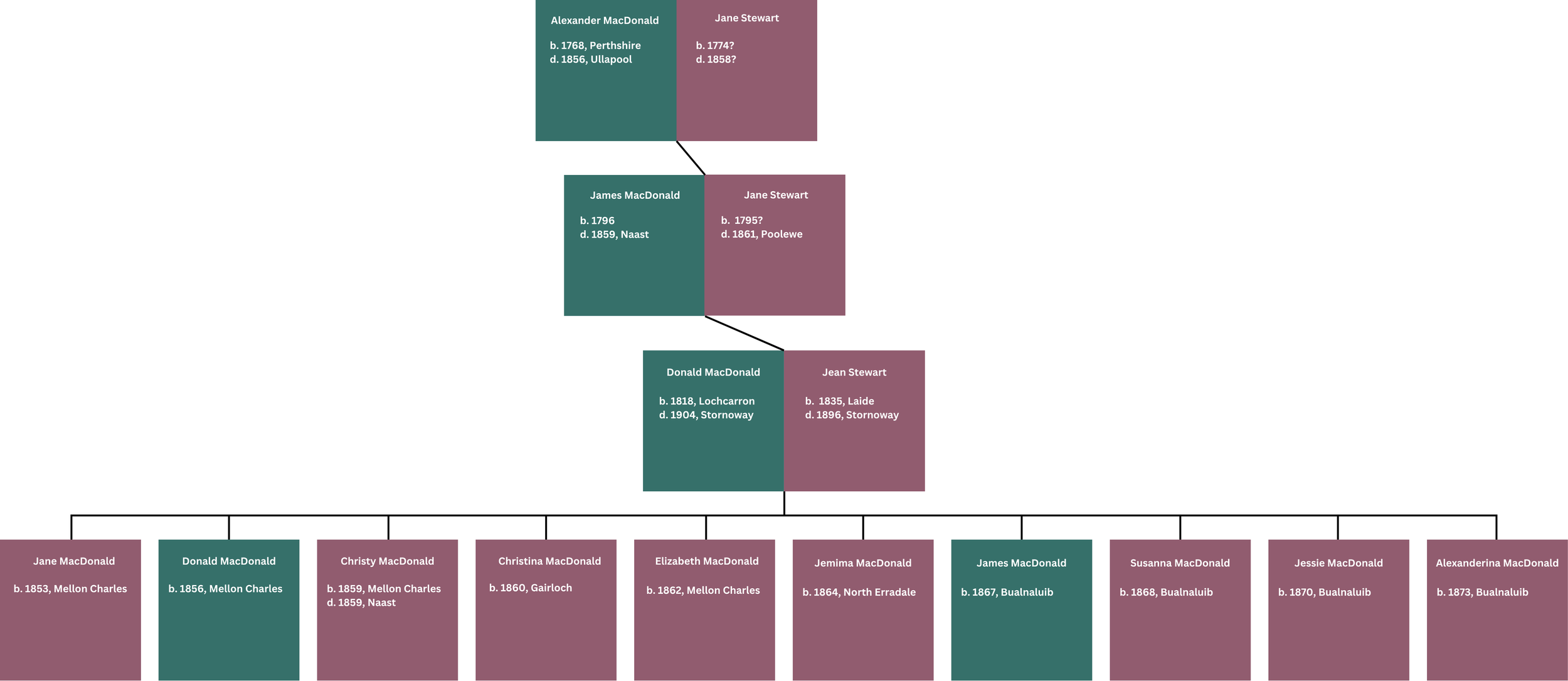
This family of MacDonald Travellers largely intermarried with the offspring of a family of Perthshire Stewarts who originated from Blair Atholl and Little Dunkeld but later moved westwards to hawk their wares in Ross and Cromarty. Alexander the spoon maker’s family continue to have a long association with the Gairloch Parish after his death. His son James and daughter-in-law Jane Stewart (one of the Perthshire Stewarts) can be traced throughout the west coast by the birth of their children; Donald born in Lochcarron in 1818, John in Lochalsh in 1820, and Janet (born 1829) and Jane (born about 1836) in Gairloch. James and Jane die in Naast, Inverasdale in 1859 and Poolewe in 1861 respectively, and are buried within Londubh Graveyard in Poolewe. If there were grave markers, they are lost today.
James MacDonald’s son Donald marries his cousin Jean Stewart (a descendant of the Perthshire Stewarts), born in Laide in about 1835, and the pattern of the births of this new family’s children is interesting. First child Jane is born in Mellon Charles in about 1853, as is Donald in about 1856. Next daughter Christina is born in Lot (Croft) 37, Strath of Gairloch in 1860, before the whole family are camped in Udrigle, Laide for the 1861 census. Another daughter Elizabeth known as “Leesie” is born in Mellon Charles in 1862, before Jemima in North Erradale in 1864, and James and Susanna in Bualnaluib in 1867 and 1868. Finally, Jessie and Alexanderina are born in Bualnaluib in 1870 and 1873. The whole family of parents and 7 children are in a 1-bedroom house with window in Bualnaluib for the 1871 census. There were two other children who died in infancy; Christy born Mellon Charles in 1859 who died in Naast, and James who was born and died in 1867 in Bualnaluib.
The unique feature of Donald MacDonald and Jean Stewart’s family is that although they do travel, it isn’t as far as we “assume” they would. Their route for almost 30 years appears to concentrate on the shores of Loch Ewe and Loch Gairloch, stopping within well-established camping or dwelling spots. This family likely moved around on foot with a hand cart, as opposed to a horse drawn cart, and this may explain why their territory appears smaller than for Travellers using horse and cart. From this we can assume that this MacDonald family were very well known within the area, and their skills of mending and making tin, and hawking goods into households, were valued and relied upon. Perhaps local crofters along the route had an understanding with the family that they would use a field or outhouse in exchange for agricultural labour and wares, and this works for both family and local community for almost three decades.
Sometime between the 1871 Gairloch census and the 1881 Stornoway census, Donald and his family appear to permanently relocate to the Isle of Lewis and are found in Stornoway and Barvas in the 1881 and 1891 census records, still recorded as a family of travelling tinsmiths. In the 1901 Stornoway census, widowed Donald is recorded as ‘a retired tinsmith’, and along with some of his daughters and grandchildren they are in a house at 29 Sandwick North Street, Stornoway.
None of Donald’s children are found in Gairloch records post 1871, although his daughter Jemima and husband Alexander Drummond are found in Applecross in the 1901 census. Similarly, none of Donald’s grandchildren are found in Gairloch records but they do continue travelling and hawking in North and South Uist, the Isle of Skye and the Isle of Lewis.
The reason why the MacDonalds leave our area after decades of making connections is uncertain. Looking at the census records there were always around 4 Traveller families – different groups of the MacDonalds, Williamsons and Stewarts – who visit the Gairloch Parish. From 1871 the Wilson and Millar families join, and as we’ve seen they eventually settle within North Erradale. From 1891 onwards, when the MacDonald have moved on to Lewis, a host of new Traveller families are documented, all as hawkers, and hailing from slightly further away in the Highlands than before. Perhaps from 1881 onwards there was too much competition for the MacDonald family within the Gairloch area, or perhaps with most of their children grown it was time to move on and they left a void which other families filled. We might never know, but it is certain that the MacDonalds have left their mark on the Gairloch Parish.
Each of these posts have left us with more questions than answers – can you help?
Do you know where within Bualnaluib in the 1871 census the MacDonald had their one bedroom house? We wonder if their ‘house’ is actually a tent, and the ‘window’ actually an opening.
Do you know of any known camping site within Udrigle or Laide where Travellers traditionally camped?
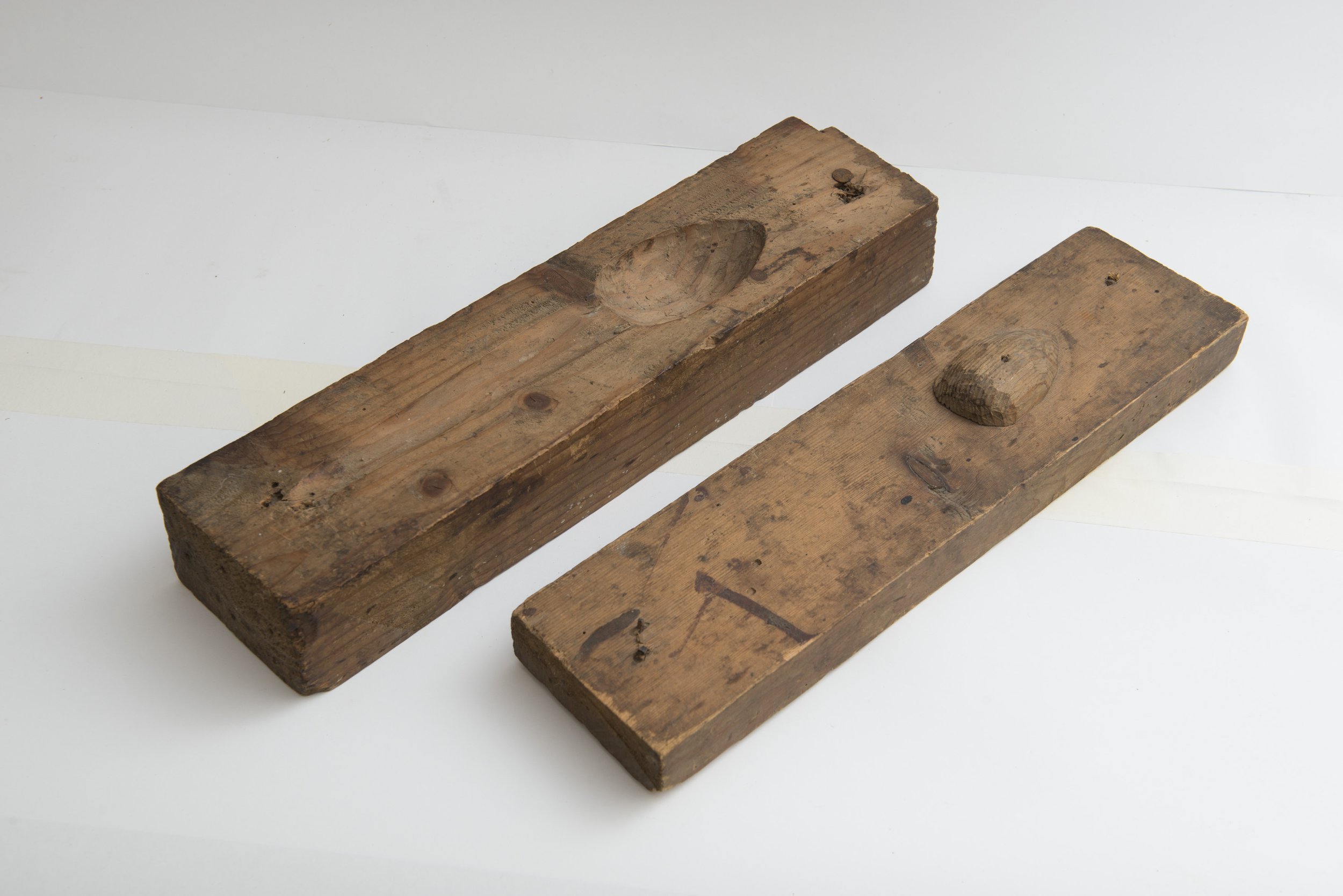
[Horn spoon mould from the collection of Ullapool Museum, ULM 2017.004]
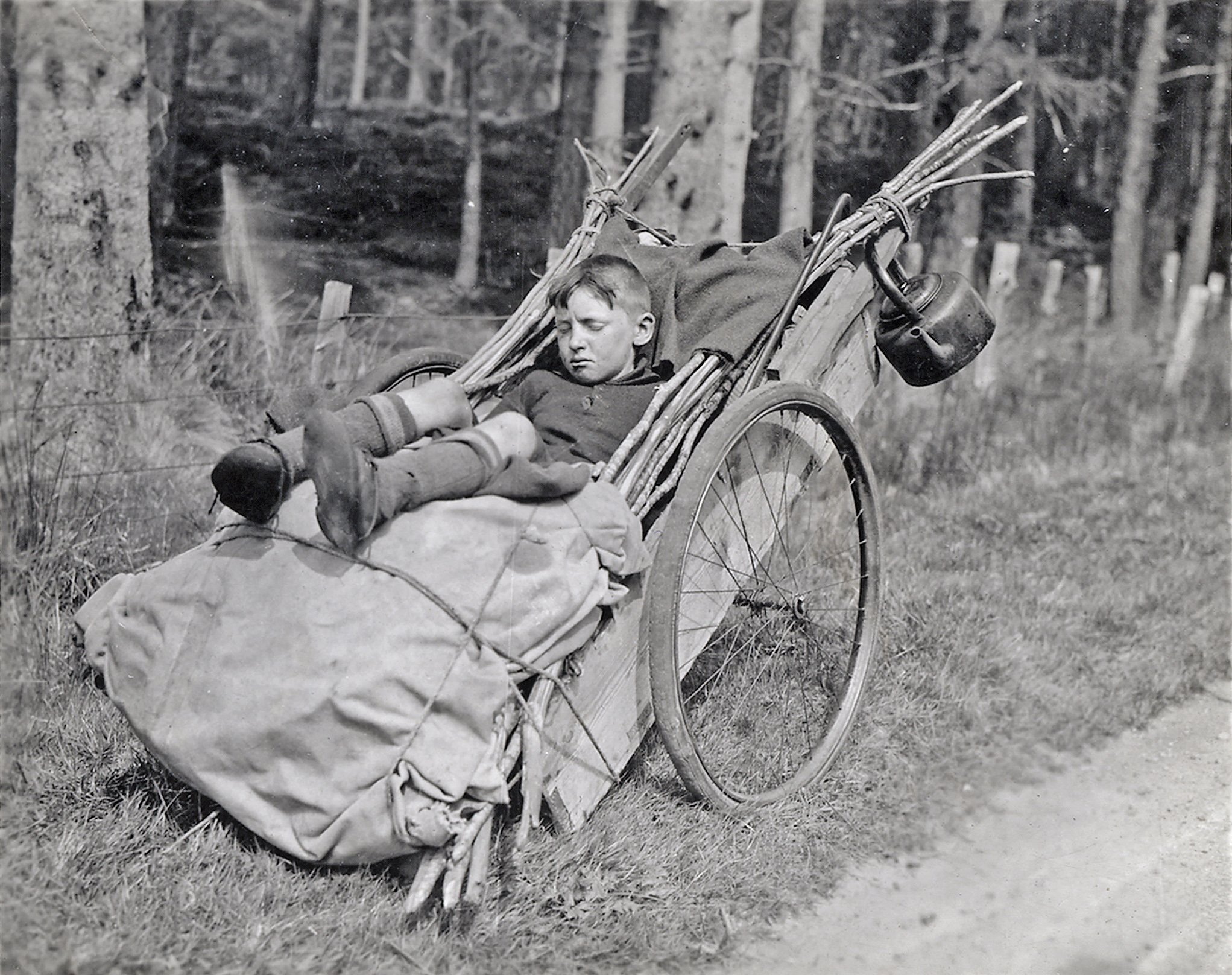
[A Traveller’s hand cart, image courtesy of Am Baile/Inverness Museum and Art Gallery/Gordon Shennan Collection]
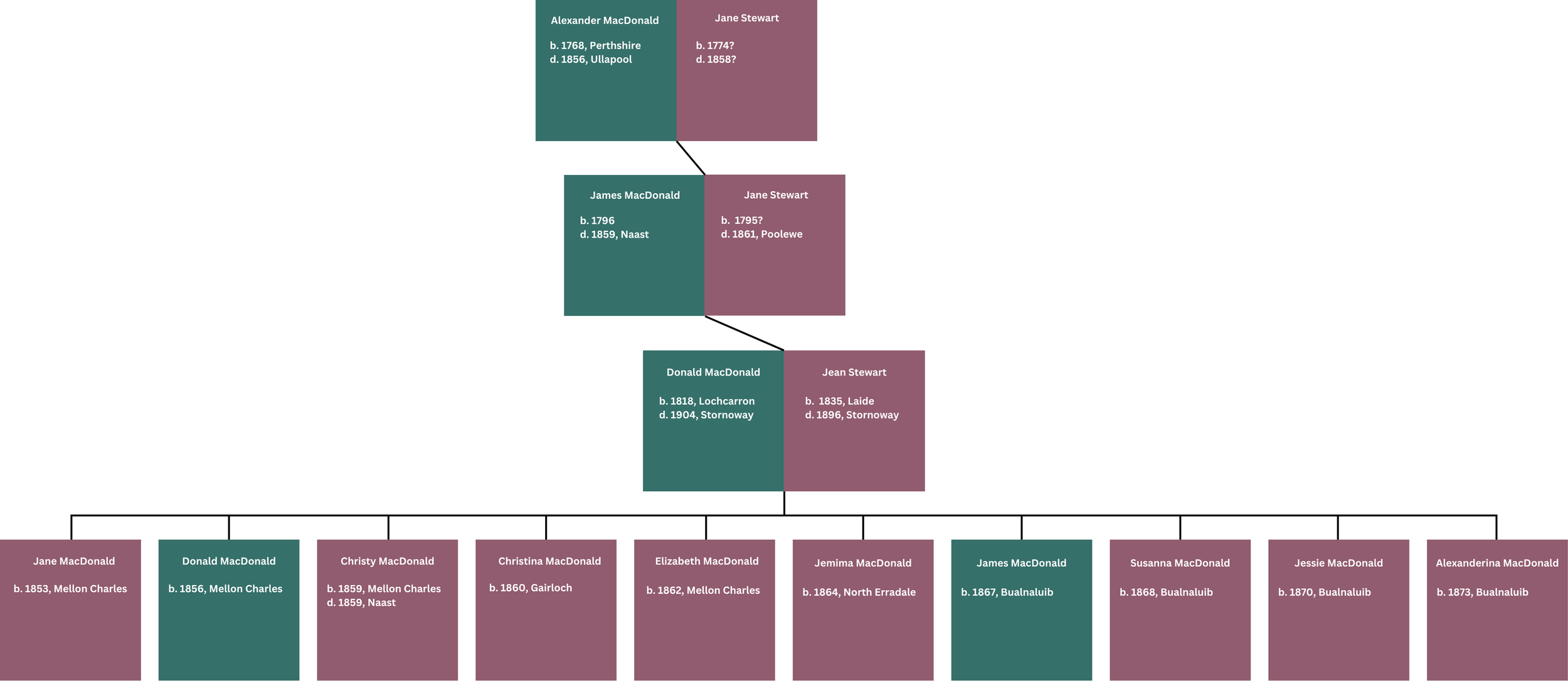
[family tree – image courtesy of Gairloch Museum]